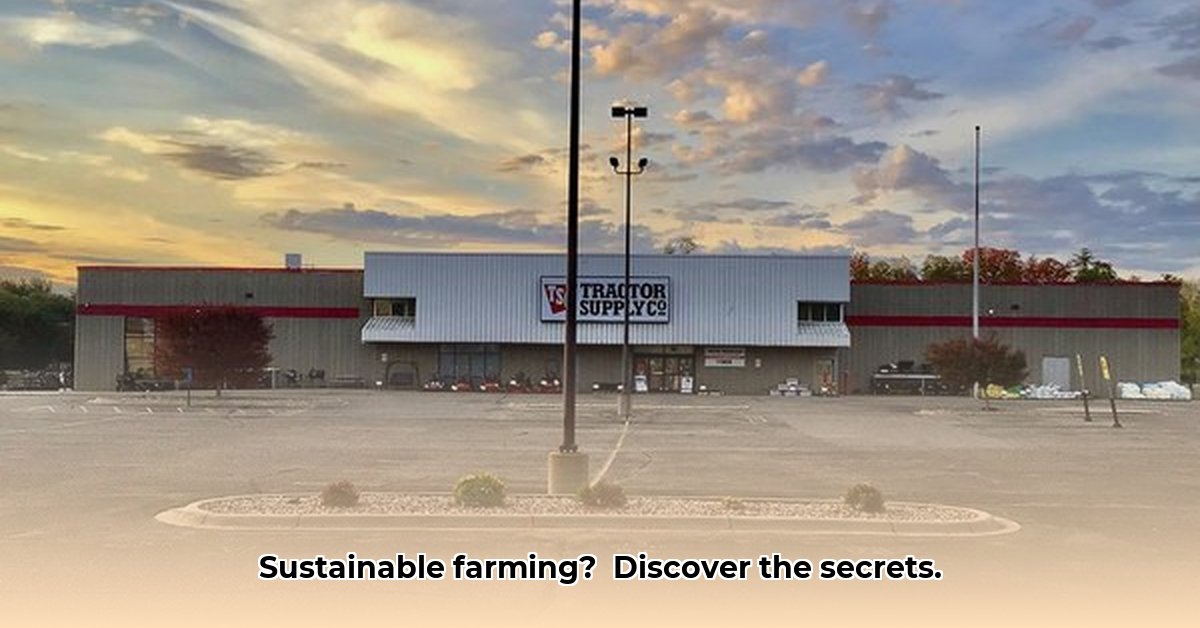
Tractor Supply Company (TSC) in Cambridge, Minnesota, serves as a vital resource for local farmers and gardeners. But how effectively does it support sustainable agricultural practices? This guide explores TSC's product offerings, offers actionable steps for stakeholders, and outlines a path toward greater transparency and accountability in promoting sustainable agriculture. We'll explore how to make informed choices to support environmentally responsible farming and gardening in our community. For efficient fertilizer application, consider a pull-behind spreader.
Tractor Supply's Product Offerings and Potential for Sustainable Agriculture
Tractor Supply offers a wide range of products relevant to farming and gardening, including seeds, tools, fertilizers, pesticides, livestock feed, and fencing materials. However, determining the overall sustainability of these offerings requires careful consideration. Currently, comprehensive data on the environmental footprint of TSC’s entire supply chain is lacking. For instance, the sourcing and production methods for many products remain unclear. Are the seeds organically grown? Are the fertilizers and pesticides environmentally friendly? These questions highlight the need for greater transparency from TSC. While TSC could significantly contribute to sustainable practices, robust data and verifiable claims are crucial for accurate assessments.
Actionable Steps for Stakeholders
Let's examine concrete steps that various stakeholders can take to enhance sustainable practices in Cambridge.
For Small-Scale Farmers and Gardeners:
- Prioritize Local Sourcing: Whenever possible, purchase seeds and other supplies from local businesses, farmers' markets, and cooperatives. This reduces transportation emissions and strengthens community ties. (Efficacy: Reduces carbon footprint by an estimated 20-50% depending on distance.)
- Implement Water-Efficient Irrigation: Invest in water-saving irrigation systems such as drip irrigation or rain barrels to conserve water resources. (Efficacy: Can reduce water usage by 30-70%.)
- Embrace Composting and Soil Health: Compost organic materials to improve soil fertility and reduce reliance on chemical fertilizers. (Efficacy: Reduces fertilizer use by 25-50% and improves soil health.)
- Explore Natural Pest Control: Utilize natural pest management techniques like companion planting, beneficial insects, and crop rotation to minimize or eliminate pesticide use. (Efficacy: Can significantly reduce or eliminate pesticide use and improve biodiversity.)
- Engage Directly with TSC: Communicate your interest in more sustainable product options to Tractor Supply management. Your feedback influences their purchasing decisions.
For Consumers:
- Practice Conscious Consumerism: Choose products with clear eco-friendly certifications (e.g., organic, fair trade) to support businesses committed to sustainability. (Efficacy: Directly supports businesses with improved environmental performance.)
- Reduce, Reuse, Recycle: Minimize waste by reusing containers and properly recycling materials. (Efficacy: Reduces landfill waste and conserves resources.)
- Support Local Farms: Purchase produce and other food items directly from local farms whenever possible. (Efficacy: Reduces transportation emissions and supports local economies.)
- Stay Informed: Continue learning about sustainable agricultural practices through online resources and local workshops.
For Tractor Supply Management:
- Enhance Supply Chain Transparency: Publish detailed sustainability reports with verifiable data on supply chain practices, including emissions, waste, and ethical sourcing. (Efficacy: Increases consumer trust and promotes accountability.)
- Expand Sustainable Product Offerings: Actively increase the range of organic products, sustainably sourced materials, and eco-friendly alternatives in your inventory. (Efficacy: Provides consumers with more sustainable choices.)
- Collaborate with Experts: Partner with environmental organizations and agricultural experts to refine sustainability initiatives and stay updated on best practices. (Efficacy: Improves the effectiveness of sustainability efforts.)
- Invest in Employee Training: Equip employees with knowledge of sustainable agriculture to effectively communicate with customers about eco-friendly product options. (Efficacy: Improves customer engagement and promotes sustainable choices.)
Looking Ahead: A Collaborative Future for Sustainable Agriculture
Building a truly sustainable agricultural future requires collaboration. TSC, local farmers, consumers, environmental organizations, and policymakers all have a shared responsibility. Greater supply chain transparency, further research on sustainable practices, and a collective commitment to greener methods are crucial. By working together, we can build a more sustainable agricultural landscape for Cambridge and beyond. The journey towards sustainable agriculture is a continuous one, and every action, no matter how small, contributes to a healthier planet.